Hygiene is essential in every laundry operation. In commercial environments, however, it goes far beyond clean-looking textiles. Laundry businesses need processes that deliver dependable disinfection, protect fabric quality, and support smooth daily operations without unnecessary disruption.
For operators in hospitality, healthcare, care homes, and professional textile care, hygienic performance is closely linked to business performance. When linen is processed correctly, it supports safety, customer satisfaction, compliance, and operational continuity. When processes fall short, the consequences can include rewash, damaged textiles, inconsistent results, higher costs, and avoidable downtime.
That is why modern commercial laundries need more than equipment alone.
They need smart solutions that help them save water, energy, and time while maintaining high hygiene standards and staying in control of the full textile care process.
Hygiene is about more than appearance
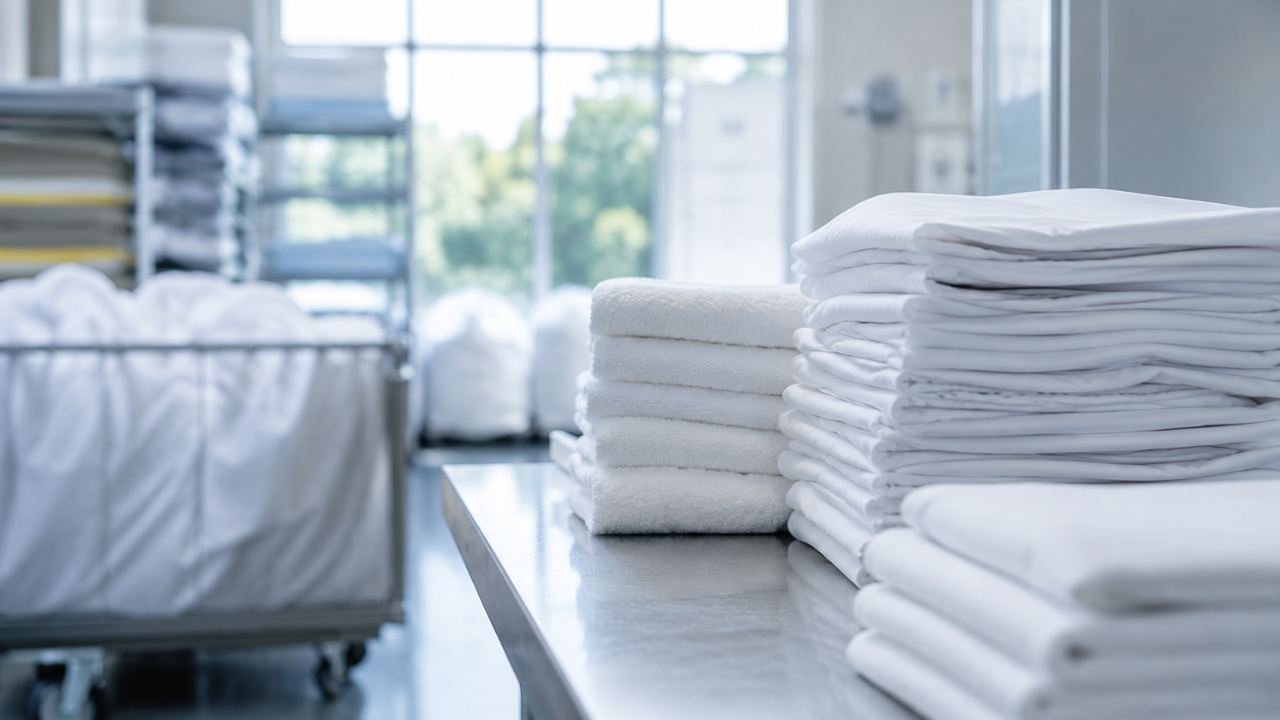
In any commercial laundry, visual cleanliness is only one part of the result. Textiles may look clean, but hygienic performance depends on what happens throughout the entire wash process and beyond it. Operators need to be confident that their procedures help remove or reduce contaminants effectively, while still preserving the quality and lifespan of the linen.
This is especially important in environments where linen hygiene has a direct impact on customer wellbeing. In hotels, fresh and hygienic linen supports guest comfort and brand reputation. In healthcare and care settings, hygienic textile processing plays an important role in infection control. In professional garment care, operators need to combine fabric protection with reliable cleaning results.
Achieving this balance requires the right process, the right equipment, and the right level of control.
Designed for hygiene, built for performance
Effective textile disinfection depends on a controlled wash process. A successful result is built on several factors working together, including temperature, chemicals, mechanical action, and cycle time. When these elements are aligned correctly, laundries can achieve strong hygienic outcomes while maintaining the quality, feel, and appearance of the textile.
This balance matters because operators are often processing a wide range of items, each with different requirements. Bed linen, towels, table linen, workwear, uniforms, and delicate garments do not all require the same treatment. Applying the wrong wash process can lead to poor hygiene, damaged fabrics, unnecessary water and energy use, or reduced textile life.
That is why process consistency matters so much. Standardized programs and carefully designed wash parameters help ensure that each load is treated according to its requirements. Technologies such as OptiLoad (an automatic weighing system that modifies water and detergent use), and EasySoap (doses detergents to have the optimal level of chemicals for the laundry needs), help improve reliability, reduce the chance of operator error, and make it easier to maintain high standards across the laundry operation.
For commercial laundries, better hygiene should not come at the cost of efficiency.
The right solutions help operators achieve both.
Protecting textile quality while meeting hygiene expectations
One of the most common challenges in laundry operations is maintaining hygiene without compromising fabric care. Some items require robust wash conditions, while others need a gentler approach to protect texture, color, and structure.
For these sensitive items, the process needs to be precise. The right combination of wash action, chemicals, and cycle design can help operators maintain hygienic performance while extending textile life and improving final quality.
This is where advanced laundry technology can make a measurable difference. Equipment that offers better control over wash parameters gives operators more flexibility to care for different textile types correctly. That means less damage, better presentation, fewer rewashes, and stronger overall efficiency.
Protecting textiles is not only about appearance. It is also about cost control. Extending linen life reduces replacement costs and helps businesses get more value from every item they process.
Greater control through smart technology
Consistent hygiene requires more than the right settings on paper. It requires confidence that every cycle is running as intended and that performance remains stable day after day.
Smart technology helps make that possible. With intuitive touch controls such as XControl Flex Touch Control, operators can select the correct programs more easily, reduce complexity, and improve consistency across shifts and teams. This is especially valuable in busy commercial environments where ease of use supports both productivity and quality.
Connected technology adds another layer of control. It allows operators and managers to gain better visibility into laundry performance, monitor machine usage, review cycle activity, and respond more quickly when something is not working as expected. With the iTrace management platform, operators can monitor the performance of their laundry more easily and stay in control of daily operations.
This type of insight supports better decision-making throughout the laundry. It can help identify inefficiencies, track performance trends, and improve process discipline. It also helps operators take a more proactive approach to machine care, which is essential for keeping the business running smoothly.
Supporting uptime with preventive maintenance
In commercial laundry, unplanned downtime affects more than performance. It can delay deliveries, reduce customer satisfaction, increase labor pressure, and create unnecessary costs across the business.
That is why preventive maintenance is so important. Instead of reacting to equipment failures, laundries benefit from identifying issues early and taking action before they lead to major disruption.
Connected functionality can support this by helping teams detect irregular performance, monitor equipment condition, and plan maintenance more effectively. Combined with regular inspections and routine servicing, this approach helps reduce unexpected breakdowns and protect uptime.
A proactive maintenance strategy can help commercial laundries:
– Avoid costly disruptions
– Extend equipment life
– Improve day-to-day reliability
– Support more predictable operations
– Reduce the risk of major repairs
For laundry operators, keeping machines running is essential. Preventive maintenance helps ensure the laundry stays productive, efficient, and ready to meet daily demand.
Prevent recontamination after washing
Textile hygiene does not stop when the wash cycle ends. Clean linen must continue through the rest of the laundry process without being exposed to recontamination. If handling, storage, or transport procedures are not controlled properly, the value of the wash process can be compromised.
That is why hygiene must be considered as a full-process responsibility, not just a wash-stage outcome.
A complete hygiene approach includes:
– Separation of soiled and clean linen
– Clear handling protocols
– Good staff hygiene practices
– Storage areas designed to protect processed textiles
– Workflow layouts that support safe and efficient movement
Separating dirty and clean flows is one of the most important steps. A well-planned laundry layout helps minimize contact between contaminated and processed items, while also improving efficiency and reducing unnecessary handling. Our Primus experts can support you on the laundry set up during the drawing phase.
Staff training matters as well. Teams should understand the correct procedures for moving, storing, and preparing clean linen for delivery or use. This is particularly important in sectors where hygiene standards are closely monitored and where errors can affect both compliance and reputation.
By controlling the full process, laundries can strengthen hygiene performance from wash start to final delivery.
Efficiency and hygiene should work together
In modern commercial laundries, hygiene and efficiency are not separate goals.
They support each other. A well-controlled process improves consistency, reduces rewash, protects textile quality, and helps avoid wasted water, energy, chemicals, and labor.
The same technologies that support better hygiene can also improve overall operational performance. Intuitive controls save time. Connected systems improve visibility. Preventive maintenance reduces disruption. Efficient machine design helps lower resource consumption.
For businesses facing growing pressure to reduce costs and operate more sustainably, this combination matters. Saving water, energy, and time is not only a sustainability benefit. It is also a practical way to improve margins and strengthen daily operations.
Solutions that support your business
At Primus, we develop smart laundry solutions that help businesses improve hygiene, simplify daily operations, and keep their laundry running smoothly. Our technologies are designed to support you on water, energy, and time savings while giving operators greater control over every stage of the laundry process.
With intuitive controls, connected capabilities, and a proactive approach to preventive maintenance, Primus helps commercial laundries improve efficiency, reduce disruption, and avoid costly downtime. The result is a laundry operation that is easier to manage, better equipped to protect textile quality, and more prepared to maintain high hygiene standards every day.
Whether you operate in hospitality, healthcare, care environments, or professional textile care, the right laundry solution can help you improve both performance and reliability.
Keep hygiene high. Keep your laundry moving.
Discover laundry solutions designed to support hygienic performance, textile care, and operational reliability.
Contact us to learn more about Primus laundry solutions.